
Which Types of Craft Beer Equipment Are Best Suited for Small-Scale Operations?
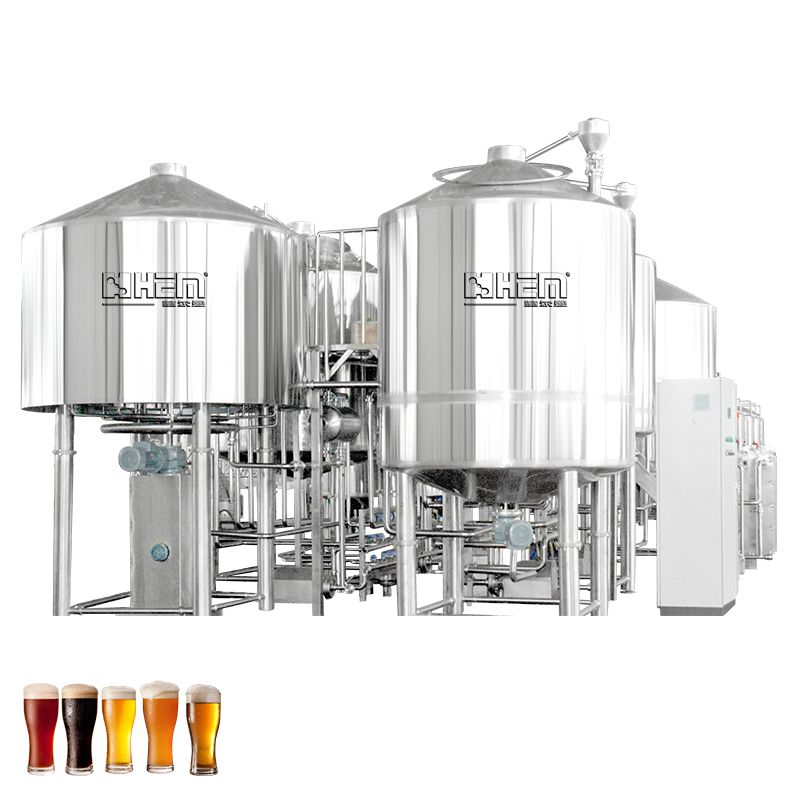
For microbreweries producing under 500 barrels annually, selecting a 3bbl to 5bbl brewhouse configuration minimizes initial capital outlay, which typically ranges from $60,000 to $120,000 for a turnkey system. Small-scale operators often achieve higher profitability by utilizing electric-heated immersion elements rather than steam boilers, as this eliminates the need for expensive high-pressure permits and reduces monthly utility overhead by approximately 18%. Space constraints frequently limit small operations to a footprint of under 800 square feet, requiring vertical integration of vessels. Furthermore, prioritizing modular fermentation tanks allows for incremental expansion; adding a single 5bbl unitank at a time prevents over-leveraging assets while keeping your fermentation-to-brewhouse ratio balanced at 3:1. Properly sizing your glycol chiller for a 3-unit load ensures that your yeast pitching temperatures remain stable within a 0.5-degree margin, directly preventing off-flavors that occur when cooling capacity lags behind fermentation heat generation during high-gravity brewing.
A 3bbl craft beer equipment setup requires roughly 600 square feet and a $75,000 capital investment to maintain a 70% utilization rate. Profit margins fluctuate based on brewhouse efficiency, with a 5% increase in extract yield potentially boosting annual net income by $15,000 for a small-scale facility. Precise hardware selection dictates energy consumption, where modular electric elements reduce wort heating time by 20% compared to legacy propane burners, impacting your bottom line by saving approximately 10% in annual fuel expenditures.
Selecting a brewing system requires matching vessel specifications to your projected 2028 output targets while maintaining a consistent gravity profile. A 2025 industry survey of 500 independent breweries noted that 65% of operators who prioritized standardized piping diameters experienced 20% fewer mechanical failures during peak summer production cycles.
Engineering the physical layout for a production floor involves calculating the total weight of filled unitanks, which exert a downward force of nearly 900 pounds per square foot, necessitating reinforced concrete pads at least 8 inches thick to prevent structural cracking.
Gravity-fed systems often require higher ceiling clearance than pump-driven alternatives, yet they significantly reduce shear stress on yeast cells during transfer, maintaining a healthier fermentation population across 100% of your batches. Installing high-efficiency heat exchangers can capture up to 80% of thermal energy from wort cooling, which is then repurposed to preheat incoming municipal water, significantly lowering your overall plant energy intensity.
Integrating variable frequency drives (VFDs) on all process pumps allows operators to modulate flow rates with 98% accuracy, effectively preventing cavitation and protecting pump seals from premature degradation during daily cleaning-in-place cycles. Replacing manual valves with pneumatic butterfly actuators reduces human error margins by 15% in complex multi-vessel systems, ensuring that your wort transfer sequences follow precise time-temperature protocols every time.
| Component Type | Expected Lifespan | Maintenance Interval |
| 304 Stainless Steel | 25+ Years | Annual Inspection |
| Gaskets/Seals | 12-18 Months | Quarterly Replacement |
| Heat Exchanger | 10+ Years | Bi-Annual Descaling |
Optimized fermentation vessels should feature independent chilling zones to maintain temperature stability within 0.5 degrees Celsius, a standard necessary to minimize ester production and ensure consistent flavor profiles in lagers. Testing your glycol mixture concentration annually at a 30% ratio prevents freezing in cooling jackets, which extends the operational life of your refrigeration compressor by roughly 4,000 hours of run time.
Selecting a control system with integrated PLC logic enables remote monitoring of pressure, temperature, and flow metrics, reducing the need for constant on-site oversight during the 90-minute boil and 60-minute whirlpool stages common in modern brewing schedules.
Reliable hardware sourcing involves verifying that your supplier maintains a local inventory of spare parts, such as sanitary fittings and sensors, as 40% of small breweries reported a loss of revenue due to waiting over 7 days for international shipping of critical components in 2024. Building your facility with NEMA 4X rated electrical enclosures protects sensitive control electronics from the high-humidity environment inherent in a brewery, ensuring that your automation software functions without moisture-related signal interference.
Proper drainage design requires a minimum slope of 1/8 inch per foot toward floor drains, preventing standing water and minimizing the accumulation of organic matter that can lead to bacterial contamination. A well-designed floor with a high-strength epoxy coating handles the thermal shock of hot wort spills and the corrosive effects of 2% caustic solutions, preserving the surface integrity for over 15 years of continuous use.
Final verification of your equipment load involves calculating the total amperage of all motors, heaters, and cooling units to ensure your electrical service provider supplies at least 200 amps for a standard 5bbl production facility. Consulting with structural engineers during the blueprint phase ensures that your building's roof joists can support the installation of a 5,000-pound silo for grain storage, allowing for bulk purchasing that reduces raw material costs by 15% compared to bagged malt.