
What should you look for in a complete floor scrubber buying guide?
The value of a truly comprehensive floor scrubber purchasing guide lies in its ability to transform a one-time capital expenditure into operational advantages that last for several years. Research shows that procurement decisions based on data analysis can increase the overall efficiency of equipment by 35% and achieve a return on investment of up to 150% within 12 months. A professional floor scrubber buying guide should first guide you to analyze the floor type of your business and the frequency of stain load. For example, the epoxy floor of a warehouse logistics center needs to withstand 5-ton forklifts traveling back and forth 50 times a day. Its equipment needs to have a brush pressure of no less than 70 kilograms and a sewage recovery flow rate of 20 liters per minute. On the contrary, the smooth tiles in high-end shopping malls only require meticulous care three times a week with a pressure of less than 25 kilograms. The wrong choice can lead to a 15% annual increase in the floor wear rate and incur an additional annual repair cost of 200 yuan per square meter.
The core chapters of the guideline must provide a detailed interpretation of the core technical parameters of the equipment. The working width ranges from the economical 51 cm to the efficient 100 cm. For every additional 10 cm in width, the average single cleaning efficiency increases by 18%. The battery voltage and capacity determine the continuous operation time. A 24V/400Ah knight floor scrubber can work continuously for 6 hours, covering an area of over 18,000 square meters. The rotational speed of the brush disc (usually within the range of 1200 to 2000 RPM) and the vacuum degree of the water-absorbing brush (not less than 15 kPa) jointly determine the sewage recovery rate of over 95%, which is the key to the rapid drying and anti-slip safety of the ground. As Tennant pointed out in its technical white paper, for every 10% deviation in parameter matching, the long-term cleaning cost will increase by an additional 25%.
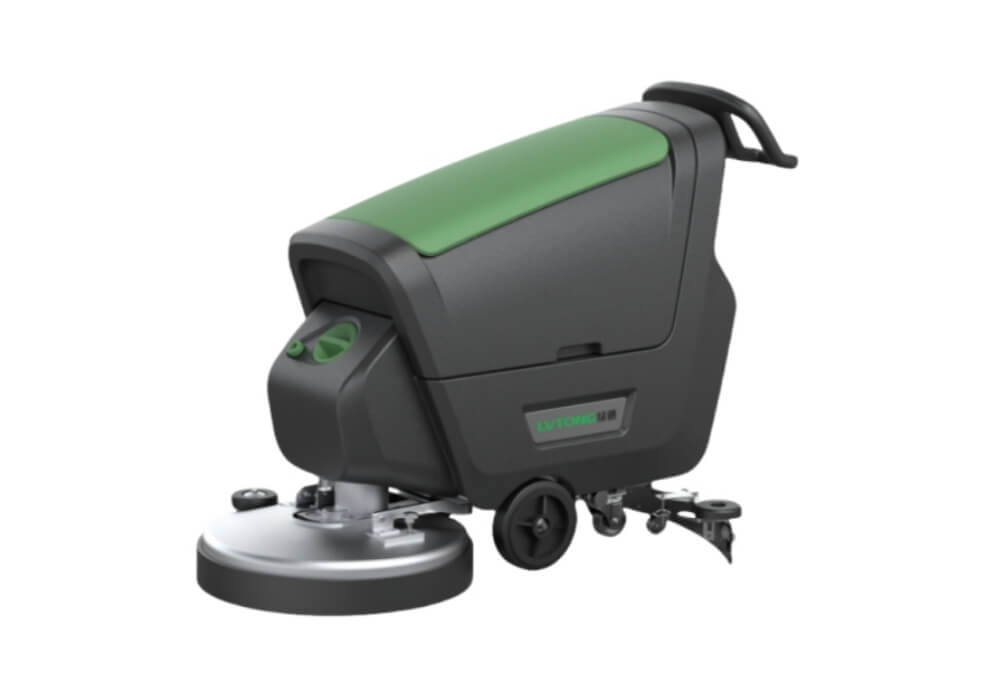 A responsible floor scrubber buying guide will devote at least 30% of its space to elaborating on the "total cost of ownership" model, which is far more than the initial purchase budget of 20,000 to 200,000 yuan. It covers energy consumption over a period of five years (accounting for approximately 8% of the cost), replacement cycles of vulnerable parts (such as brush discs every 200 hours and water-absorbing rubber strips every 500 hours), and preventive maintenance costs (accounting for about 5% of the initial equipment price on average each year). Take Walmart's supply chain management as an example. By standardizing battery models and centralized procurement of components, it has reduced the annual maintenance cost of each of its 3,000 devices across the entire network by 22%. At the same time, it is necessary to assess the response time of the supplier's service network to ensure that fault repair is completed within 4 hours and to keep the probability of unexpected downtime below 2% per year.
In the face of harsh environments such as food processing and medical care, the guidelines need to provide specialized solutions that comply with regulations. In HACCP-certified food workshops, the equipment must be made of 316 stainless steel and be capable of providing high-temperature hot water cleaning above 80℃ to ensure that the microbial killing rate reaches 99.9%. Hospitals give priority to models equipped with HEPA filters and electrolyzed water functions to achieve chemical-free cleaning and reduce the rate of nosocomial infections by 20%. For instance, in a public health study conducted in 2020, hospitals that adopted such comprehensive solutions saw a 70% drop in the detection rate of surface pathogens in ICU wards.
Ultimately, a forward-looking floor scrubber buying guide must explore intelligence and sustainability. The Internet of Things module can transmit real-time data on water consumption, energy consumption and working paths. Through the analysis of this information, managers can optimize the cleaning process and reduce resource consumption by 15%. The EU's eco-design directive also drives industry innovation, with the energy consumption of the new generation of equipment reduced by an average of 5% annually. Choosing devices that support lithium battery technology and have noise levels below 65 decibels not only reduces the carbon footprint by 30% but also directly enhances employee satisfaction. Therefore, the ultimate goal of this guide is to guide you in choosing a device that can be seamlessly integrated into your intelligent facility management ecosystem, transforming it from a cost center into a value node that continuously outputs clean data and operational efficiency.
A responsible floor scrubber buying guide will devote at least 30% of its space to elaborating on the "total cost of ownership" model, which is far more than the initial purchase budget of 20,000 to 200,000 yuan. It covers energy consumption over a period of five years (accounting for approximately 8% of the cost), replacement cycles of vulnerable parts (such as brush discs every 200 hours and water-absorbing rubber strips every 500 hours), and preventive maintenance costs (accounting for about 5% of the initial equipment price on average each year). Take Walmart's supply chain management as an example. By standardizing battery models and centralized procurement of components, it has reduced the annual maintenance cost of each of its 3,000 devices across the entire network by 22%. At the same time, it is necessary to assess the response time of the supplier's service network to ensure that fault repair is completed within 4 hours and to keep the probability of unexpected downtime below 2% per year.
In the face of harsh environments such as food processing and medical care, the guidelines need to provide specialized solutions that comply with regulations. In HACCP-certified food workshops, the equipment must be made of 316 stainless steel and be capable of providing high-temperature hot water cleaning above 80℃ to ensure that the microbial killing rate reaches 99.9%. Hospitals give priority to models equipped with HEPA filters and electrolyzed water functions to achieve chemical-free cleaning and reduce the rate of nosocomial infections by 20%. For instance, in a public health study conducted in 2020, hospitals that adopted such comprehensive solutions saw a 70% drop in the detection rate of surface pathogens in ICU wards.
Ultimately, a forward-looking floor scrubber buying guide must explore intelligence and sustainability. The Internet of Things module can transmit real-time data on water consumption, energy consumption and working paths. Through the analysis of this information, managers can optimize the cleaning process and reduce resource consumption by 15%. The EU's eco-design directive also drives industry innovation, with the energy consumption of the new generation of equipment reduced by an average of 5% annually. Choosing devices that support lithium battery technology and have noise levels below 65 decibels not only reduces the carbon footprint by 30% but also directly enhances employee satisfaction. Therefore, the ultimate goal of this guide is to guide you in choosing a device that can be seamlessly integrated into your intelligent facility management ecosystem, transforming it from a cost center into a value node that continuously outputs clean data and operational efficiency.
A responsible floor scrubber buying guide will devote at least 30% of its space to elaborating on the "total cost of ownership" model, which is far more than the initial purchase budget of 20,000 to 200,000 yuan. It covers energy consumption over a period of five years (accounting for approximately 8% of the cost), replacement cycles of vulnerable parts (such as brush discs every 200 hours and water-absorbing rubber strips every 500 hours), and preventive maintenance costs (accounting for about 5% of the initial equipment price on average each year). Take Walmart's supply chain management as an example. By standardizing battery models and centralized procurement of components, it has reduced the annual maintenance cost of each of its 3,000 devices across the entire network by 22%. At the same time, it is necessary to assess the response time of the supplier's service network to ensure that fault repair is completed within 4 hours and to keep the probability of unexpected downtime below 2% per year.
In the face of harsh environments such as food processing and medical care, the guidelines need to provide specialized solutions that comply with regulations. In HACCP-certified food workshops, the equipment must be made of 316 stainless steel and be capable of providing high-temperature hot water cleaning above 80℃ to ensure that the microbial killing rate reaches 99.9%. Hospitals give priority to models equipped with HEPA filters and electrolyzed water functions to achieve chemical-free cleaning and reduce the rate of nosocomial infections by 20%. For instance, in a public health study conducted in 2020, hospitals that adopted such comprehensive solutions saw a 70% drop in the detection rate of surface pathogens in ICU wards.
Ultimately, a forward-looking floor scrubber buying guide must explore intelligence and sustainability. The Internet of Things module can transmit real-time data on water consumption, energy consumption and working paths. Through the analysis of this information, managers can optimize the cleaning process and reduce resource consumption by 15%. The EU's eco-design directive also drives industry innovation, with the energy consumption of the new generation of equipment reduced by an average of 5% annually. Choosing devices that support lithium battery technology and have noise levels below 65 decibels not only reduces the carbon footprint by 30% but also directly enhances employee satisfaction. Therefore, the ultimate goal of this guide is to guide you in choosing a device that can be seamlessly integrated into your intelligent facility management ecosystem, transforming it from a cost center into a value node that continuously outputs clean data and operational efficiency.